Video Podcast Production for Brands: From Studio Setup to 30 Clips per Episode
Why brands are moving podcasts to video, how to design a show that lasts, the technical setup, the production workflow and how to turn each episode into a month of content · 12 min read
Podcasts used to be an audio format you discovered through an app. Today, a large share of podcast consumption happens on video platforms, and the clips cut from episodes travel across social feeds far beyond the show’s subscribers. For brands, that changes the math: a well-produced video podcast isn’t just a show — it’s a content engine that can feed social, newsletters, sales conversations and paid campaigns for weeks.
But video podcast production is also where many brand shows go wrong. A camera pointed at two people talking is not a show, and a great conversation recorded with bad audio is unwatchable. This guide covers why brands are moving podcasts to video, how to design a format that lasts beyond episode five, the technical setup that matters most, a production workflow that keeps the cadence sustainable and how to turn every episode into dozens of assets.
- IN SHORT
A successful brand video podcast is built on three things: a format with a clear point of view and a repeatable structure, production quality where audio comes first and the set looks intentional, and a distribution system that turns each recording into a full episode plus many short clips for every platform.
- WHY VIDEO
Why brands are moving their podcasts to video
The first reason is discovery. Audio-only shows grow mostly through word of mouth and podcast app charts. Video shows can be discovered through video search and recommendations, and their clips can reach people who would never search for a podcast at all. A forty-second moment from an interview can find an audience on its own, and bring some of that audience back to the full episode.
The second reason is trust. Seeing the people behind a brand — their expressions, their reactions, the way they think out loud — builds a kind of familiarity that a polished ad rarely achieves. For B2B brands and for companies built around expertise, that’s often the main goal: to be known for how they think, not just what they sell.
The third reason is efficiency. A single recording session can produce a long-form episode, short clips for every social platform, quote cards, newsletter content, material for sales and recruiting, and sometimes paid ad creative. When it’s planned that way, a video podcast is one of the most efficient content investments a brand can make. When it isn’t, it’s an expensive hour of footage that lives on one channel.
- THE FORMAT
Designing a show that lasts beyond episode five
Most brand podcasts don’t fail because of production; they fail because the format runs out of steam. The first few episodes feature the founders and the most obvious guests, and then the show loses its reason to exist.
Start with a point of view, not a topic
‘A podcast about marketing’ is a topic. ‘Conversations with the people who build content teams at the world’s biggest streaming brands, about what actually breaks when you scale’ is a point of view. A sharp angle makes guest selection easier, helps the audience understand why to subscribe and keeps the brand connected to the content without turning it into an ad.
Choose a structure you can repeat
Recurring segments — a signature opening question, a rapid-fire round, a ‘what would you do differently’ closer — give each episode a familiar rhythm and make it easier to cut clips. They also make the show easier to produce, because the team knows what to prepare.
Pick the right format for your goal
Interview shows build relationships with guests and their audiences. Panel or co-host formats create chemistry and recurring characters. Narrative or documentary-style series take more production but stand out. Internal or executive shows work well for employer branding and communications — see employer branding videos.
Plan a season, not a single episode
Seasons of eight to twelve episodes create natural checkpoints to review performance, refresh the format and plan guests ahead. They also make it easier to batch-record, which brings costs down significantly.
- THE SETUP
The technical setup that actually matters
Audio first, always
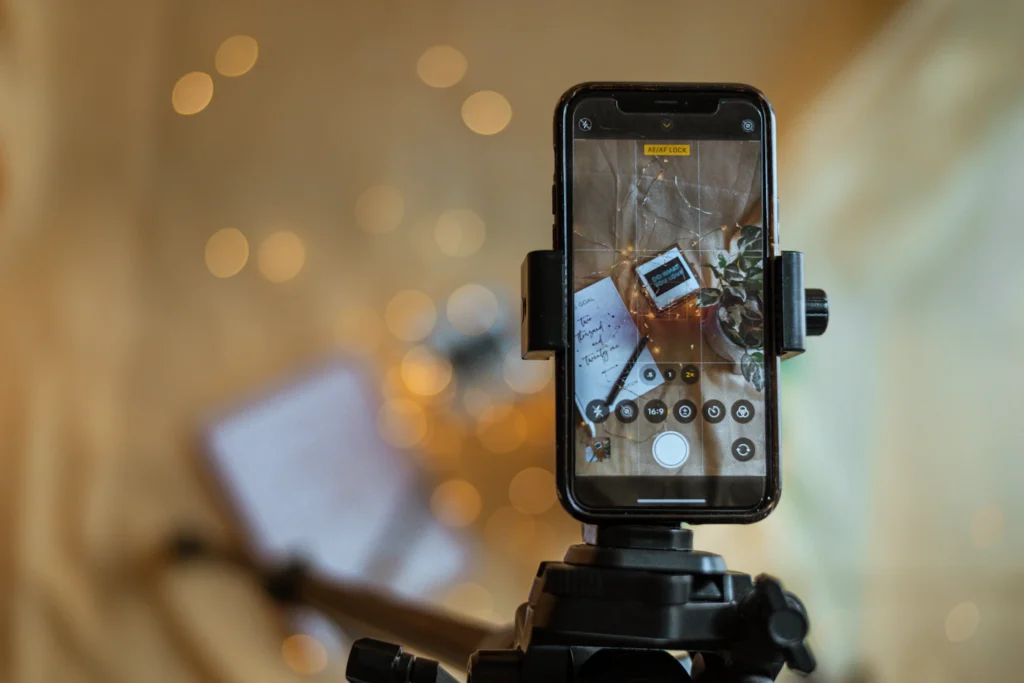
Viewers forgive an average image; they don’t forgive bad sound. Dedicated microphones for each speaker, a treated room that doesn’t echo and someone monitoring levels during the recording matter more than any camera upgrade. Record each voice on its own track so the mix can be balanced later.
Multi-camera coverage
Two or three cameras — a wide shot and a close-up on each speaker — give the editor options and make the conversation feel dynamic. Frame with vertical clips in mind: leave enough room around each speaker so a 9:16 crop still looks intentional, as explained in our vertical video production guide.
Light and set as part of the brand
The set is the show’s visual identity. Consistent lighting, a background that reflects the brand without looking like a trade-show booth, and small recognizable details make every clip instantly identifiable in a feed. Design it once, document it and keep it consistent across episodes.
Remote guests without compromising quality
Not every guest can come to the studio. Remote recording tools that capture each participant locally, a simple kit sent in advance and a short tech check before recording can bring remote interviews close to studio quality.
- ONE EPISODE, MANY ASSETS
What one recording session can become
The full episode
A multi-camera edit with chapters, graphics and a mastered audio mix, published on video platforms, plus the audio version for podcast apps.
Short clips
Ten to thirty vertical and square clips built around single ideas, strong opinions or memorable stories, captioned and branded for each platform.
Everything else
Quote cards, thumbnails, newsletter excerpts, blog summaries, sales snippets and ad variations — all from the same hour of conversation.
- THE WORKFLOW
A video podcast production workflow you can sustain
Before the recording
Research each guest, agree on two or three themes worth exploring and share a short run of show — not a script. Good preparation is what produces the specific stories and strong opinions that become the best clips. Confirm logistics, releases and any topics that need legal or communications review.
Record in batches
Recording two to four episodes in one studio day dramatically reduces cost per episode: the set, lighting and crew are already in place. It also builds a buffer, so a cancelled guest doesn’t break the release schedule.
Edit the episode and mine the clips in parallel
While the main episode is being edited — multi-camera switching, tightening, graphics, chapters and an audio master — a second editor should be finding the moments that work on their own. Mark them during the recording if possible; a producer noting timestamps saves hours later. Each clip needs its own hook in the first seconds, captions and a consistent visual template.
Publish on a rhythm
Release the full episode on a regular day and spread the clips across the following weeks, so one recording keeps the channels active until the next one. Plan this in your video content calendar.
Review each season
Look at completion rates, which clips traveled furthest, which guests brought new audiences and where viewers dropped off. Use the data to adjust guests, segments and episode length for the next season. Our guide on how to repurpose video content covers the clipping system in more depth.
Who should produce it?
A brand podcast needs a mix of skills that few marketing teams have in-house: producing, audio engineering, multi-camera editing, motion graphics and short-form editing for social. Many brands keep the editorial voice and host internal and work with a production partner for the rest. At Pegasus, podcast production is part of our content production work, and the same team that records and edits the episodes cuts the clips and builds the graphics package — which keeps every asset consistent.
Frequently asked questions
What is video podcast production?
The planning, recording, editing and distribution of a podcast filmed on camera, typically with multiple cameras and professional audio, published as full video episodes plus short clips for social platforms and an audio version for podcast apps.
Why should a brand make a video podcast instead of audio only?
Video podcasts can be discovered on video platforms and social feeds, build stronger familiarity with the people behind the brand and produce many short clips from each recording, making them a much more efficient content investment.
What equipment do you need for a video podcast?
A dedicated microphone for each speaker, a treated room, two or three cameras, consistent lighting and a designed set. Audio quality matters most; viewers tolerate average video much more than poor sound.
How long should a brand video podcast episode be?
Long enough to say something meaningful and short enough to hold attention — many brand shows land between 25 and 60 minutes. Let completion data guide adjustments season by season.
How many clips can one episode produce?
With planning, a single episode can produce ten to thirty short clips for different platforms, plus quote cards, thumbnails and written content.
How often should we publish episodes?
Consistency matters more than frequency. A weekly or biweekly rhythm is common; recording in batches and spreading clips between episodes keeps channels active without overloading the team.
One conversation. A month of content.
Format, recording, editing, clips and graphics — video podcast production from one team. Let’s talk about your show.