Video Localization Agency: How to Choose a Partner That Makes Every Market Feel Native
What a video localization agency does, the different kinds of providers, how to evaluate them and how to build localization into your production from day one · 12 min read
Taking video to new markets used to mean adding subtitles at the end and hoping for the best. That approach doesn’t hold up anymore. Viewers in every market are used to content that feels made for them, platforms reject files that don’t meet their specs, and a joke that lands in New York can confuse — or offend — an audience in Berlin or Istanbul. The difference between a video that travels and one that falls flat is usually not the translation itself, but everything around it.
That’s what a video localization agency is for. This guide explains what these agencies actually do, the different kinds of providers you’ll find, how to evaluate them beyond price per minute, and how to set up localization so it becomes a smooth part of production instead of a costly afterthought. We’ll also share how localization fits into the work we do for global brands like Roku, Tastemade and Delivery Hero. If you need the fundamentals first — subtitles vs dubbing vs voice-over and the full workflow — start with our video localization guide.
- DEFINITION
A video localization agency adapts video content for new languages and markets — handling transcreation, subtitles and captions, voice-over and dubbing, translated graphics, cultural review, technical QC and delivery — so each version feels native to its audience and meets the specs of every platform it runs on.
- WHAT THEY DO
What a video localization agency actually does
Transcreation, not just translation
Scripts, on-screen copy and calls to action are rewritten for meaning, tone and impact in each language. A tagline that rhymes in English, a pun in a product name or a cultural reference in a recipe show rarely survives literal translation. Good agencies use native writers who understand both the brand and the category, and they flag lines that simply won’t travel so you can decide how to adapt them.
Subtitles and captions
Subtitling is a craft of its own: lines have to be timed to speech and shot changes, kept short enough to read comfortably and placed where they don’t cover important visuals or platform interface elements. For social content, captions also need to work as on-screen design for sound-off viewing, which means the style matters as much as the timing.
Voice-over and dubbing
When audio needs to change, agencies cast voices that fit the brand and the original talent, direct the sessions and mix the result to the same standards as the master. Dubbing goes further, matching lip movements and performance; voice-over layers the new language over the original. Each has different costs, timelines and audience expectations by market.
Graphics and on-screen text
Titles, lower thirds, end cards, legal lines, prices and dates all have to be rebuilt per language. This is where many localization projects stall: if the original graphics were burned into the video or built without editable templates, every language becomes a re-edit. Agencies that work with your motion files directly — or with a production partner that delivers clean masters — move much faster.
Cultural review
Beyond language, a localization partner checks gestures, symbols, colors, food, humor, holidays and references that could confuse or offend. The best ones also tell you when a version needs a different scene, not just different words.
QC and delivery
Every version is checked for timing, spelling, legal requirements, audio sync and loudness, then exported to each platform’s specs with clear naming. For streaming services, that includes caption files, audio stems and the metadata platforms require. A single rejected file can delay a launch in a market, so this step is where professional agencies earn their fee.
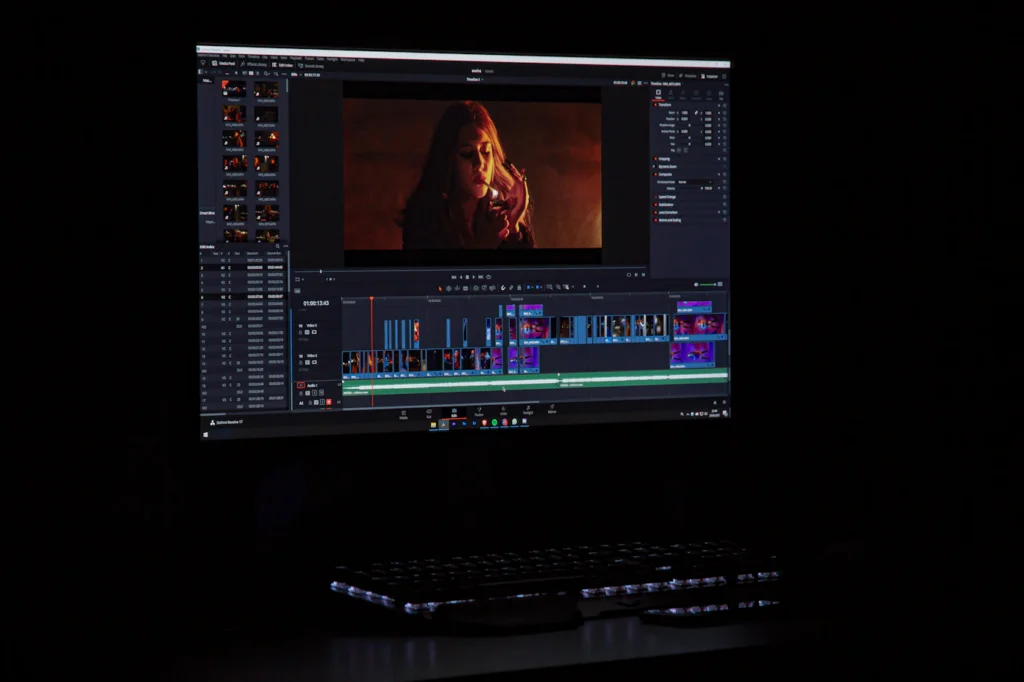
- TYPES OF PROVIDERS
Translation company, dubbing studio or video partner?
Not every company that offers video localization works the same way, and choosing the wrong type is the most common source of frustration.
Translation and language service providers are strongest on linguistic quality and language coverage. They often handle dozens of languages and have robust terminology management. Their limitation is the video itself: many receive a script, return translated text or subtitle files, and leave graphics, edits and audio to someone else. That works for simple subtitling, less so for marketing content where text is designed into the picture.
Dubbing and audio studios specialize in voice: casting, recording, lip-sync and mixing. They’re essential for long-form entertainment and kids content in dub-preferring markets. They usually expect a finished picture and clean audio stems from you, and rarely touch graphics or edits.
Video production and post-production partners approach localization from the picture side. They rebuild graphics, re-edit scenes when needed, adapt formats and durations, and deliver finished files ready to publish, working with native linguists and voice talent for each language. For marketing content — trailers, promos, social, performance creative — this is often the most efficient model, because localization becomes part of the same workflow that produced the master.
Many brands combine them: a language provider for large volumes of long-form subtitles, and a video partner for marketing assets where graphics, pacing and format matter. The key is knowing which parts of your content need which kind of expertise.
- IN PRACTICE
How localization fits into global content programs
Roku
Localization runs inside the same embedded team that produces trailers, promos, performance and motion — one of 15+ asset types across multiple channels — so versions are planned with the master, not after it.
Tastemade
High volumes of platform-native content delivered in multiple languages, plus series designed for a single market — like the 15-episode mocktail series produced for Pinterest in Germany.
Delivery Hero
One employer brand system adapted for Foodpanda, Foodora and Yemeksepeti — localization of identity, not only of language, so each brand kept its own voice.
- HOW TO CHOOSE
How to evaluate a video localization agency
Price per minute is the number everyone compares first, and it’s the least useful one. Two quotes with the same rate can produce very different results — and very different amounts of work for your team. These are the criteria that predict what you’ll actually get.
Native linguists who know your category
Ask who writes and reviews each language. Native speakers living in the market, ideally with experience in entertainment, food, retail or whatever your category is, will catch tone and reference problems a generalist won’t. Ask how they handle brand terminology and whether they’ll build a glossary with you.
Comfort with video, not just text
Request examples of localized marketing videos, not just subtitle files. Look at how titles and graphics were rebuilt, whether text expansion broke layouts, how captions were styled and whether the pacing still works. If the agency can’t touch graphics or edits, you’ll need another partner to do it — and coordinate both.
A clear workflow with your production
The best results come when localization is planned at the brief: textless masters, separate audio stems, editable graphics and a version matrix agreed upfront. Ask what the agency needs from you and when. A partner who asks for those assets early is a partner who has done this many times. Our guide to creative versioning explains how to build that matrix.
QC that covers every version
Ask how each file is checked before delivery and who signs off. Look for a defined process: linguistic review, technical QC, platform spec checks and a final review in context. Errors in localized assets are especially costly because they often go unnoticed by the central team that doesn’t speak the language.
Turnaround for real launch calendars
Global launches compress timelines: a trailer locks late, and every market still needs its version on the same day. Ask how the agency handles simultaneous releases, rush requests and late changes, and how much notice it needs for each language.
Security for unreleased content
For entertainment and product launches, confidentiality is non-negotiable. Ask about NDAs, access controls, secure file transfer and how freelance linguists are managed.
If localization is a recurring need rather than a one-off project, consider a partner that combines it with editing and post-production, so every version is produced by the same team that knows the brand. See post-production services for streaming and dedicated video editing team.
Frequently asked questions
What does a video localization agency do?
It adapts video for new languages and markets: transcreation of scripts and copy, subtitles and captions, voice-over and dubbing, rebuilt graphics, cultural review, technical QC and delivery to each platform’s specs.
How is a video localization agency different from a translation company?
A translation company focuses on text and language coverage. A video localization agency also works on the picture and sound — graphics, edits, timing, voice and delivery — so the final video is ready to publish in each market.
How much does video localization cost?
It depends on the number of languages, video length, the method (subtitles, voice-over or dubbing), the amount of on-screen text and graphics, and turnaround. Planning localization at the brief stage is the most effective way to reduce cost.
How long does it take to localize a video?
Subtitles for short marketing assets can be turned around quickly; voice-over and dubbing take longer because of casting, recording and mixing. Having textless masters, audio stems and editable graphics ready shortens every step.
Which languages should we localize into first?
Start with the markets where you have the biggest audience or growth opportunity, then expand based on performance. Some markets expect dubbing while others are comfortable with subtitles, which affects cost and timeline.
Can localization be handled by our video production partner?
Often, yes — especially for marketing content. A production or post-production partner that works with native linguists can deliver finished localized versions as part of the same workflow that produced the master.
Every market. Every version. One team.
Localization, versioning and finishing from the team that already knows your brand. Tell us which markets you’re launching in.