Food Video Production: How to Make Recipe and Food Content That People Actually Cook
Formats, food styling, shooting at scale, editing for every platform and localizing recipes for new markets — lessons from thousands of hours of food content for Tastemade · 13 min read
Food is one of the most-watched categories of video on the internet, and one of the hardest to do well. Viewers have seen thousands of recipe videos; they scroll past anything that looks generic in a fraction of a second. At the same time, food content has to be useful: if the steps aren’t clear, the measurements don’t work or the final dish looks nothing like what people make at home, trust disappears fast.
Good food video production sits at the intersection of craft and clarity. It needs the eye of a food stylist, the discipline of a production team that can shoot dozens of recipes without losing consistency, and the editing instincts to make a three-minute process feel effortless in sixty seconds. This guide covers the formats that work, what happens on a professional food set, how to shoot at scale, how to edit and version for every platform, how to localize recipes for new markets and what we’ve learned producing food content for Tastemade for nearly a decade.
- IN SHORT
Food videos that perform combine appetite appeal (styling, light and texture), clarity (steps anyone can follow) and format discipline (a recognizable structure produced consistently at volume). Behind them is a tested recipe, a planned shoot that captures every platform’s version and an edit built around the moments that make people hungry.
- THE FORMATS
The food video formats that work — and why
Overhead ‘hands and pans’ recipes
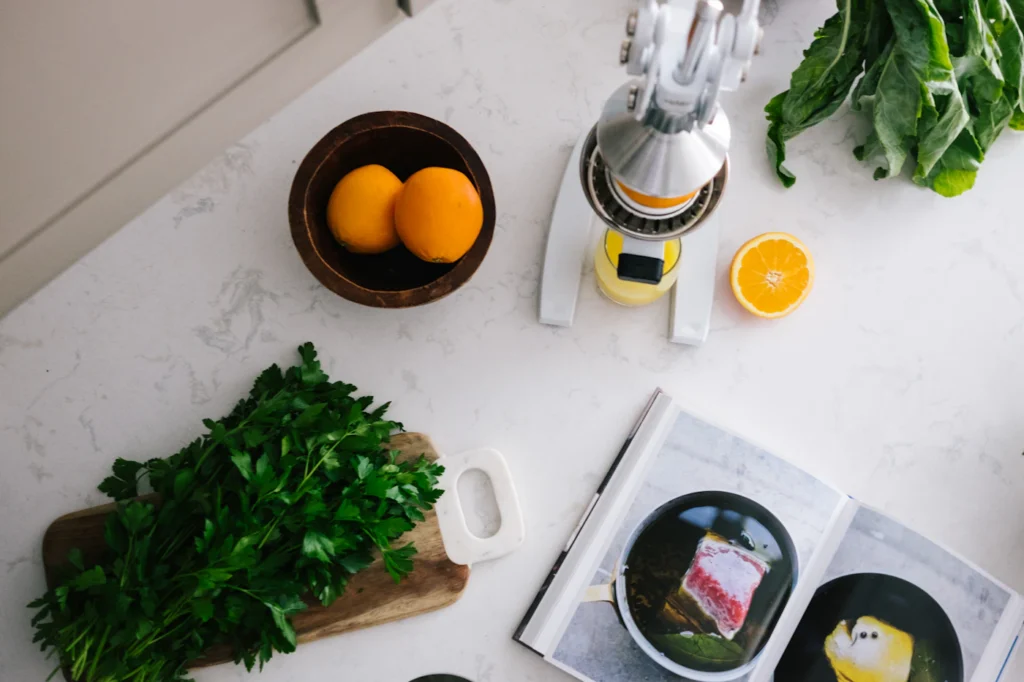
The top-down recipe video became a defining social format because it’s clear, fast and focused entirely on the food. It works best when every step has a visible transformation — chopping, sizzling, folding, melting — and when on-screen text replaces narration so the video works with the sound off. The challenge is freshness: because the format is everywhere, small signature choices in styling, surfaces and typography are what make a brand’s version recognizable.
Host-led recipes and cooking shows
A host adds personality, warmth and expertise, and makes longer formats possible — the kind that work on streaming and TV. Host-led content takes more production (talent, sound, multiple cameras) but builds a deeper relationship with viewers. It also produces strong short clips: a host’s reaction to the first bite is often the best hook in the episode.
Entertainment and brand tie-ins
Recipes inspired by shows, films or cultural moments connect food with fandom. For Tastemade, we produced 14 recipe videos inspired by HBO’s biggest series — dishes straight out of shows fans already loved. Tie-ins like this work because they give two audiences a reason to share: food lovers and fans of the show. They also require extra care with licensing, brand guidelines and approvals from both sides. More on the format in what is branded content.
Market-specific series
Some of the best-performing food content is designed for a single audience from the start. As part of Tastemade’s partnership with Pinterest, we produced a 15-episode series of stylish mocktail recipes created specifically for the German market, handling everything from production to post. Designing for one market means choosing recipes, ingredients, styling and tone that feel local rather than translated.
Short-form and performance food content
For social and paid media, food content is cut into shorter, hook-led pieces: the most satisfying moment first, the result in the first seconds, then the method. For food and beverage brands, these often double as performance creative — see performance creative.
- ON SET
What happens on a professional food set
It starts with a tested recipe
Every recipe should be developed and tested before the shoot — ideally more than once. Untested recipes cause the most expensive problems on set: a sauce that won’t thicken, a cake that sinks, a step that takes far longer than planned. Testing also tells the team exactly how many portions and backups to prepare.
Food styling is its own craft
A food stylist makes food look as good on camera as it tastes, which is harder than it sounds. Food changes under lights: greens wilt, cheese sets, ice cream melts, sauces skin over. Stylists prepare multiple versions of key components — a ‘hero’ dish for the final shot and stand-ins for setup — and time each moment so the camera catches the food at its best.
Light for texture
Food is about texture: crisp edges, glossy sauces, steam, bubbles. Soft directional light, usually from the side or behind, reveals those textures far better than flat front light. Consistent lighting across recipes is also what makes a series look like a series.
Cover every platform in one take
Overhead rigs for top-down steps, angled close-ups for texture, slow-motion for pours and drips, and framing that works for both horizontal and vertical versions. Planning the coverage in advance means a single recipe shoot can deliver a long-form version, a social cut and several short clips without reshooting.
Don’t forget sound
The sizzle of a pan, the crunch of a crust and the pour of a drink are powerful on social platforms. Recording clean food sounds on set gives editors an extra layer to make content more satisfying to watch.
- OUR WORK
Food content we've produced
Of food and lifestyle content for Tastemade over nearly a decade — TV, streaming, social and TikToks, in multiple languages.
Recipe videos inspired by HBO’s biggest series, produced for Tastemade as a branded deal that fans loved.
A stylish series made for Pinterest’s German market as part of Tastemade’s deal, from production to post.
- AT SCALE
Editing, versioning and localizing food content
Edit around the moments that make people hungry
The best food edits find the ‘money shots’ — the cheese pull, the pour, the first cut into a crust — and build the pacing around them. Steps that don’t change visually get compressed or skipped; transformations get time. Ingredient text, measurements and step numbers should be readable on a phone and consistent across every recipe in a series, so viewers learn where to look.
Batch production keeps quality and cost under control
Shooting several recipes per day on the same set, with the same lighting and styling approach, is what makes food content economical at scale. It also produces the consistency that turns individual videos into a recognizable series. The key is planning: a shot list per recipe, prep schedules that keep the hero food fresh and a clear order that minimizes resets.
Version for every platform from the same footage
A single recipe shoot can deliver a long-form version for streaming or TV, a short horizontal cut, a vertical version for social, a tall format for Pinterest and multiple short clips. Each needs its own pacing and text layout, not just a crop. See creative versioning and how to repurpose video content.
Localize the recipe, not just the words
Food localization has challenges other categories don’t. Measurements change between cups and grams, temperatures between Fahrenheit and Celsius, and some ingredients simply aren’t available — or aren’t popular — in every market. A recipe that’s a hit in the US may need a different ingredient, a different garnish or even a different dish to work in Germany or Turkey. That’s why market-specific series, like the Pinterest mocktails for Germany, are often more effective than translating a US recipe. Our video localization guide covers the broader process.
What nearly a decade with Tastemade taught us
Tastemade’s growth required a partner that could scale with it without diluting the storytelling that defines the brand. A dedicated production and post-production pod — operating as an extension of the in-house team — has delivered thousands of hours of content, from premium long-form to branded campaigns, social series and TikToks, in multiple languages. Compared with building the same capacity in-house, the model has saved around $8M, and the editorial bar went up. The lesson for any food brand or platform is that consistency at scale comes from continuity: the same people, the same standards and a production system designed for volume. See video production for streaming platforms for how that applies beyond food.
Frequently asked questions
What is food video production?
The planning, styling, filming, editing and versioning of food content — recipe videos, cooking shows, branded food series and short-form social clips — for brands, publishers and streaming platforms.
What makes a recipe video successful?
Strong appetite appeal, steps that are easy to follow, a hook that shows the result early, readable on-screen text for sound-off viewing and a recognizable format produced consistently.
Do you need a food stylist for recipe videos?
For professional results, yes. Food stylists prepare hero dishes and stand-ins, manage how food behaves under lights and time each shot so the food looks its best on camera.
How many recipes can be filmed in one day?
It depends on complexity and format. Simple overhead recipes can be batched several per day on a well-planned set; host-led or complex recipes take longer. Testing recipes beforehand makes shoot days far more predictable.
How do you adapt food videos for other countries?
Beyond translating text, adapt measurements, temperatures and ingredients to local availability and taste — and consider creating market-specific recipes rather than translating every original.
Can one food shoot produce content for every platform?
Yes, if the coverage is planned: overhead, angled and close-up shots framed for both horizontal and vertical outputs can feed long-form, social, Pinterest and short clips from the same shoot.
Food content people actually cook.
From recipe series to branded food content, produced and edited by the team behind thousands of hours for Tastemade. Let’s talk.