Video Post-Production Company: What They Do, How They Differ and How to Hire One
The services behind finished video, the different kinds of post companies, how they price and what to ask before you trust one with your footage · 12 min read
Footage is not a video. Between the last day of shooting and the moment something goes live, there’s a long chain of craft: editing the story, building graphics, grading color, designing and mixing sound, conforming at full quality, checking every frame and exporting every version. That chain is post-production, and it’s where most of the quality — and most of the delays — in a video project come from.
A video post-production company takes ownership of that chain. This guide explains what post-production companies actually do, the different kinds you’ll come across, how they price their work, what to look for when you hire one and how the right setup changes when your needs move from one big project to a constant flow of content. Along the way we share what we’ve learned as the finishing team behind hundreds of TV episodes, thousands of social cutdowns and dozens of streaming originals.
- DEFINITION
A video post-production company turns raw footage into finished, delivery-ready video. Its services typically include editing, motion graphics and VFX, color grading, sound design and mixing, finishing, quality control, versioning, localization and delivery to broadcast, streaming and social specs.
- WHAT THEY DO
What a video post-production company really handles
Editorial: building the story
Editing is where the story is found. For a commercial it’s about rhythm and message in thirty seconds; for an episode it’s structure, pacing and performance across twenty-two minutes; for social it’s a hook in the first second. Experienced editors don’t just assemble shots — they make decisions about what to leave out, and they bring an outside eye that the people who were on set no longer have.
Graphics, motion and VFX
Titles, lower thirds, animated logos, data graphics, clean-ups and visual effects are designed and integrated into the edit. The best results come when motion designers work alongside editors rather than receiving a locked cut at the end, because graphics often influence pacing. We cover this pairing in motion graphics for marketing.
Color grading
A colorist matches shots from different cameras and lighting conditions, then creates the look that gives a piece its mood and keeps a brand or series consistent. Grading also has a technical side: output for different displays and standards, so the content looks right on a TV, a phone and a cinema screen.
Sound design and mix
Audio is half the experience and the most common giveaway of an amateur production. Post teams clean dialogue, add music and effects, balance everything and mix to the loudness standards of each destination. For streaming and broadcast, they also deliver separate stems so the content can be localized later.
Finishing, QC and deliverables
Finishing brings everything together at full quality and checks it: picture, sound, sync, captions, spelling, legal lines and technical specs. Then every version is exported — masters, textless versions, cutdowns, aspect ratios and languages — with clear naming. It’s the least glamorous part of post and the one that most often decides whether a launch happens on time. Our guide to the video post-production process walks through each stage in order.
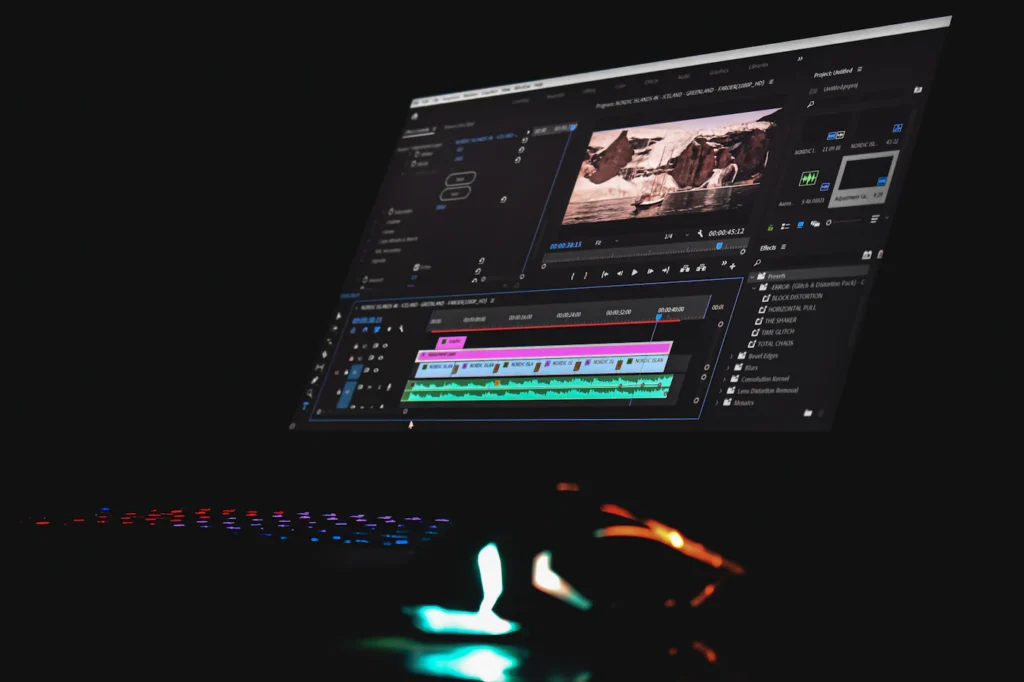
- TYPES OF POST COMPANIES
The four kinds of post-production company
Editorial boutiques
Small, editor-led companies known for the craft of their cutting, often specialized in commercials, trailers or documentaries. You hire them for a particular editor’s sensibility. They’re excellent for high-profile pieces, but often send color, sound and finishing to other specialists.
Full-service post facilities
Larger companies with editing, color suites, sound stages, VFX and finishing under one roof. They’re built for big productions with demanding technical requirements, such as feature films and premium series. Their structure and cost are designed for large, scoped projects.
Specialist houses
Colorists, sound studios, VFX shops and localization companies that do one thing at a very high level. Most projects use them as part of a chain coordinated by an editor or producer.
Dedicated or embedded post teams
A team of editors, motion designers and finishing specialists assigned to one brand or platform on an ongoing basis, often working remotely inside the client’s tools. This model is built for volume and continuity: recurring episodes, weekly promos, social cutdowns and performance variations, with the same people learning the brand over time. See dedicated video editing team for how it works.
None of these is better in general. A full-service facility is the right call for a feature film; an embedded team is the right call for a streaming service that needs dozens of finished assets every week. The mistake is hiring a model built for one situation to handle the other.
- PRICING MODELS
How post-production companies price their work
Per project
A quote for a defined scope: deliverables, review rounds and versions. Predictable for one-off pieces, but changes and extra versions usually become additional costs.
Day or suite rates
Paying for an editor, colorist or mixer by the day or hour. Common in traditional facilities; flexible, but the final total depends heavily on how efficiently feedback and approvals run.
Monthly team
A dedicated post team on a predictable monthly fee. Built for recurring volume — episodes, promos, social and versions — with the same people on your content every week.
- HOW TO HIRE
How to hire a video post-production company
Match the company to the shape of your work
Start by describing your needs honestly: is it one flagship piece a year, a campaign each quarter or a weekly flow of episodes, promos and social? The answer narrows the field immediately. A company that excels at the first may struggle with the third, and vice versa.
Look at finished work in your formats
Ask for examples that match what you need — episodic content, trailers, promos, vertical social, performance ads — and for the brief behind them. Pay attention to the details that reveal craft: audio balance, color consistency across shots, how graphics are integrated and how cutdowns hold up on their own.
Understand who does what
Ask which services are in-house and which are subcontracted. A chain of vendors isn’t necessarily bad, but someone has to own it. If you’re the one coordinating the editor, the colorist and the mixer, you’ve bought services rather than post-production.
Test the process, not just the talent
Ask how projects are scheduled, how many review rounds are included, which review tool is used, who does technical QC and how problems are flagged. A strong post partner will tell you about an issue the day it appears, not the day before delivery. That habit is worth more than any single editor’s reel.
Check delivery experience
If your content goes to streaming platforms or broadcasters, ask about their experience with technical specs, caption files, textless masters and stems. Delivery rejections are expensive and avoidable — see post-production services for streaming.
Plan for volume and peaks
Ask how the company handles a sudden spike — a season launch, a campaign with dozens of versions — and whether the extra capacity will come from people who already know your project.
What this looks like in practice
For Tastemade, we built a dedicated production and post-production pod that has delivered thousands of hours of content — from premium long-form to branded campaigns, social series and TikToks — in multiple languages. Because the same team handles editing, motion, color, sound and finishing, every episode and every cutdown carries the same standard. That’s the main argument for keeping post in one team when your volume is high: consistency stops depending on how well five vendors coordinate. You can explore our post & finishing services or compare this model with video editing agencies and outsourcing editing.
Frequently asked questions
What does a video post-production company do?
It turns raw footage into finished video: editing, motion graphics and VFX, color grading, sound design and mix, finishing, quality control, versioning, localization and delivery to every platform’s specs.
What's the difference between a production company and a post-production company?
A production company focuses on planning and filming. A post-production company takes the footage and handles everything after the shoot. Some partners do both, which reduces handoffs.
How much does video post-production cost?
It depends on length, complexity, the number of versions and the services involved — editing, graphics, color, sound and finishing. Per-project, day-rate and monthly-team models suit different needs; compare cost per finished asset for recurring work.
How long does post-production take?
Short social assets can be turned around quickly; a commercial typically takes longer, and long-form episodes longer still. Timelines depend heavily on review rounds and how quickly feedback is consolidated.
Can a post-production company work remotely?
Yes. Most editing, motion, color review and sound work can be done remotely with shared storage and a review platform, which is how many dedicated post teams work inside their clients’ workflows.
When does a dedicated post team make more sense than a facility?
When you have a constant flow of content — episodes, promos, social and versions — rather than a few large projects. A dedicated team keeps the same people on your content and builds consistency over time.
We'll get it across the finish line.
Editing, motion, color, sound, finishing and delivery — the post team behind hundreds of TV episodes and thousands of cutdowns. Let’s talk about yours.